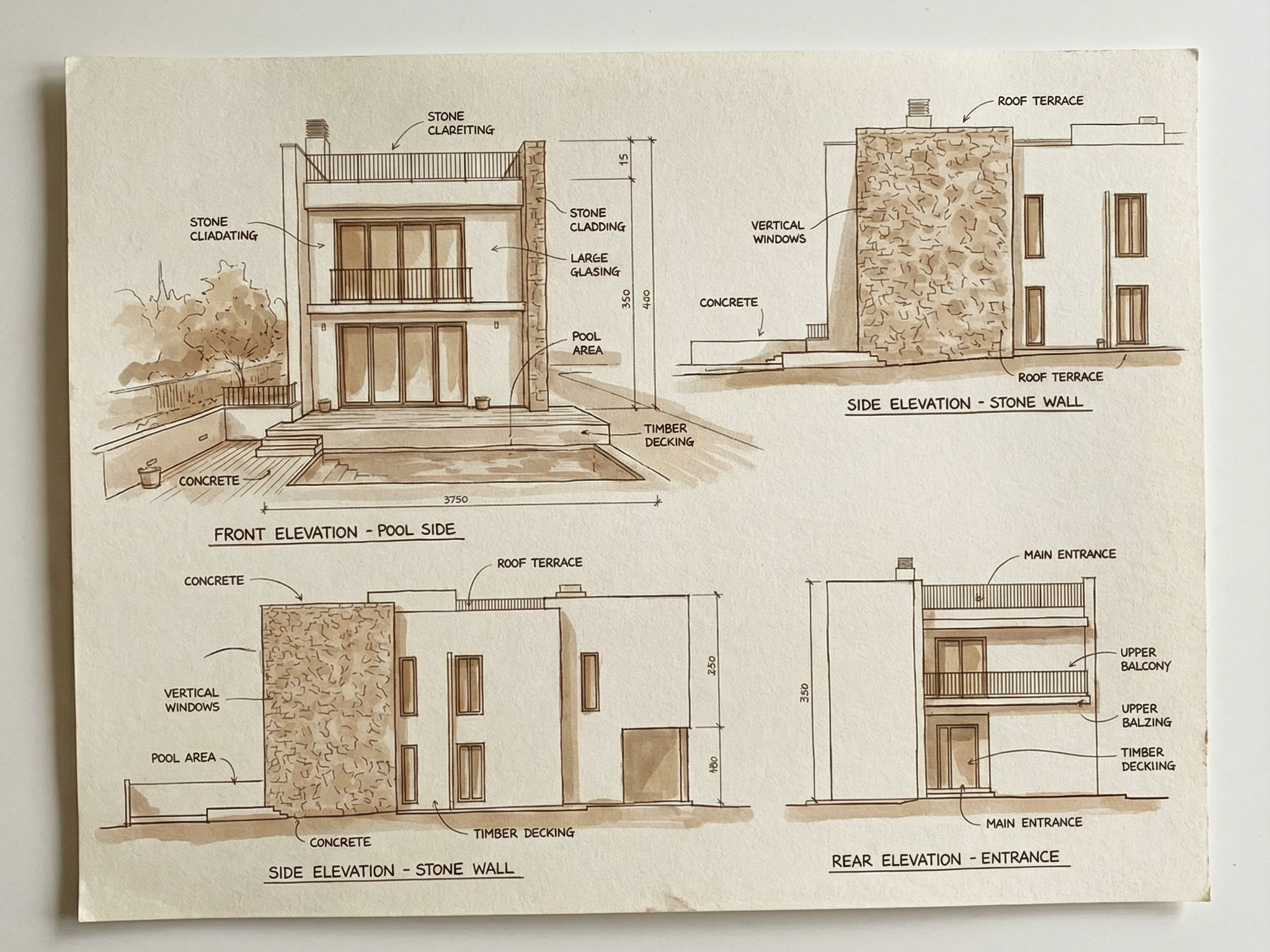
This section presents the design process behind the residence, including sketches, studies and material explorations that define the project.
It outlines the key decisions shaping the villa — from spatial organisation to construction details — providing a clear understanding of how the architecture was developed prior to construction.
Exterior Architecture – Material Character & Mediterranean Presence
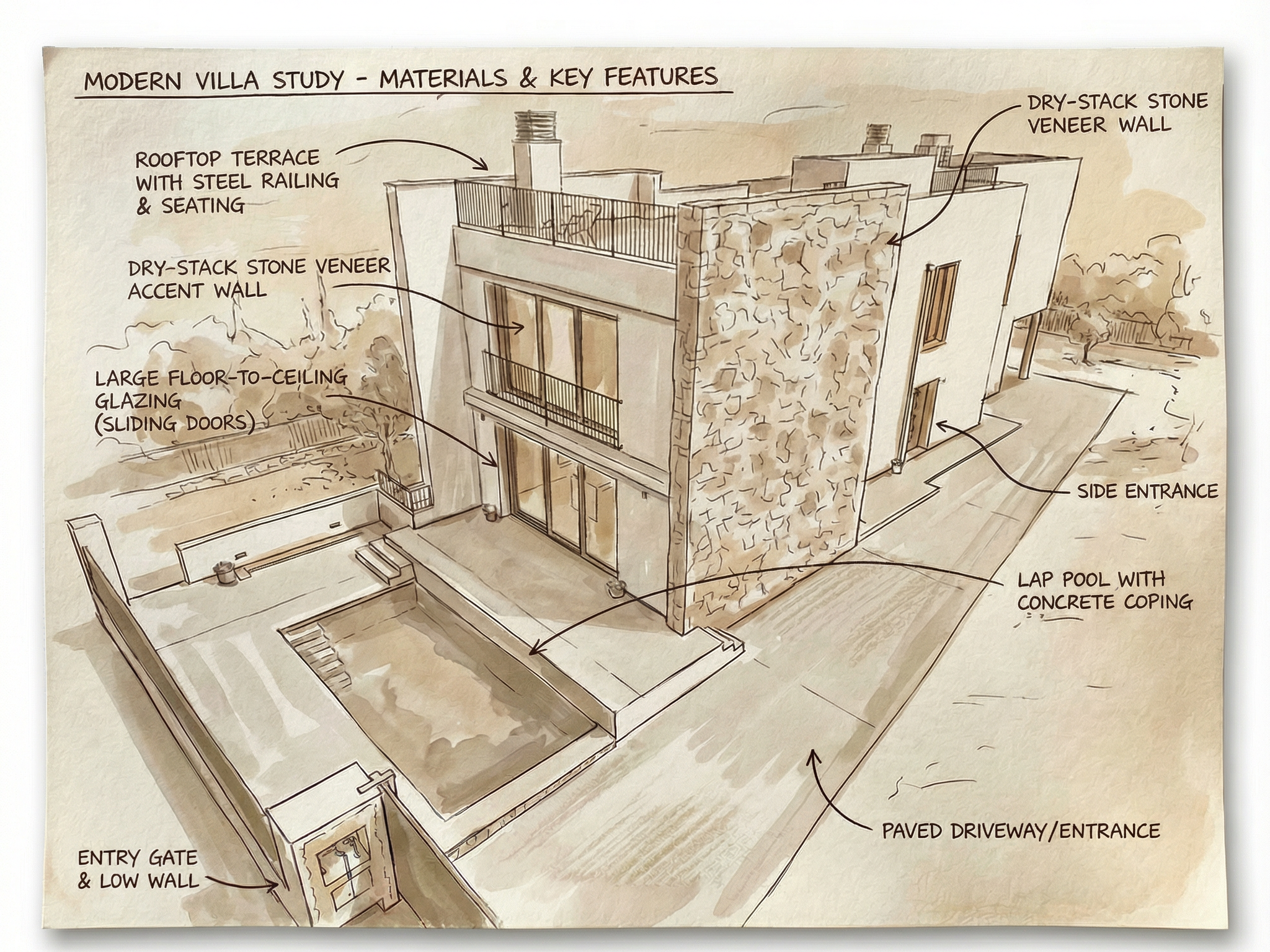
This study outlines the architectural character of the residence as a contemporary Mediterranean composition defined by clean lines, natural materials and controlled proportions.
Dry-stack Santanyí stone walls anchor the structure, reinterpreting traditional Mallorcan masonry through a precise and modern execution.
Large floor-to-ceiling sliding doors open the main living areas directly onto the pool terrace, establishing a continuous relationship between interior and exterior spaces while maximising natural light. Upper-level balconies extend this connection, offering elevated views and reinforcing the overall spatial continuity.
The rooftop terrace provides an additional private level, with integrated seating and simple metal railings, designed for outdoor use without compromising the architectural clarity of the volume.
The pool area follows a restrained design language, with clean geometry, concrete coping and low boundary elements that define the space while maintaining visual openness. Its elongated form supports both relaxation and functional swimming.
Access to the property is defined by a paved driveway and a low entry wall with a discreet gate, creating a controlled and understated arrival sequence. A secondary side entrance supports daily use while preserving the simplicity of the main façade.
Overall, the project combines modern architectural principles with local material references, resulting in a residence that is precise, durable and closely integrated with its surroundings.
Kitchen & Dining – Material Expression and Spatial Flow
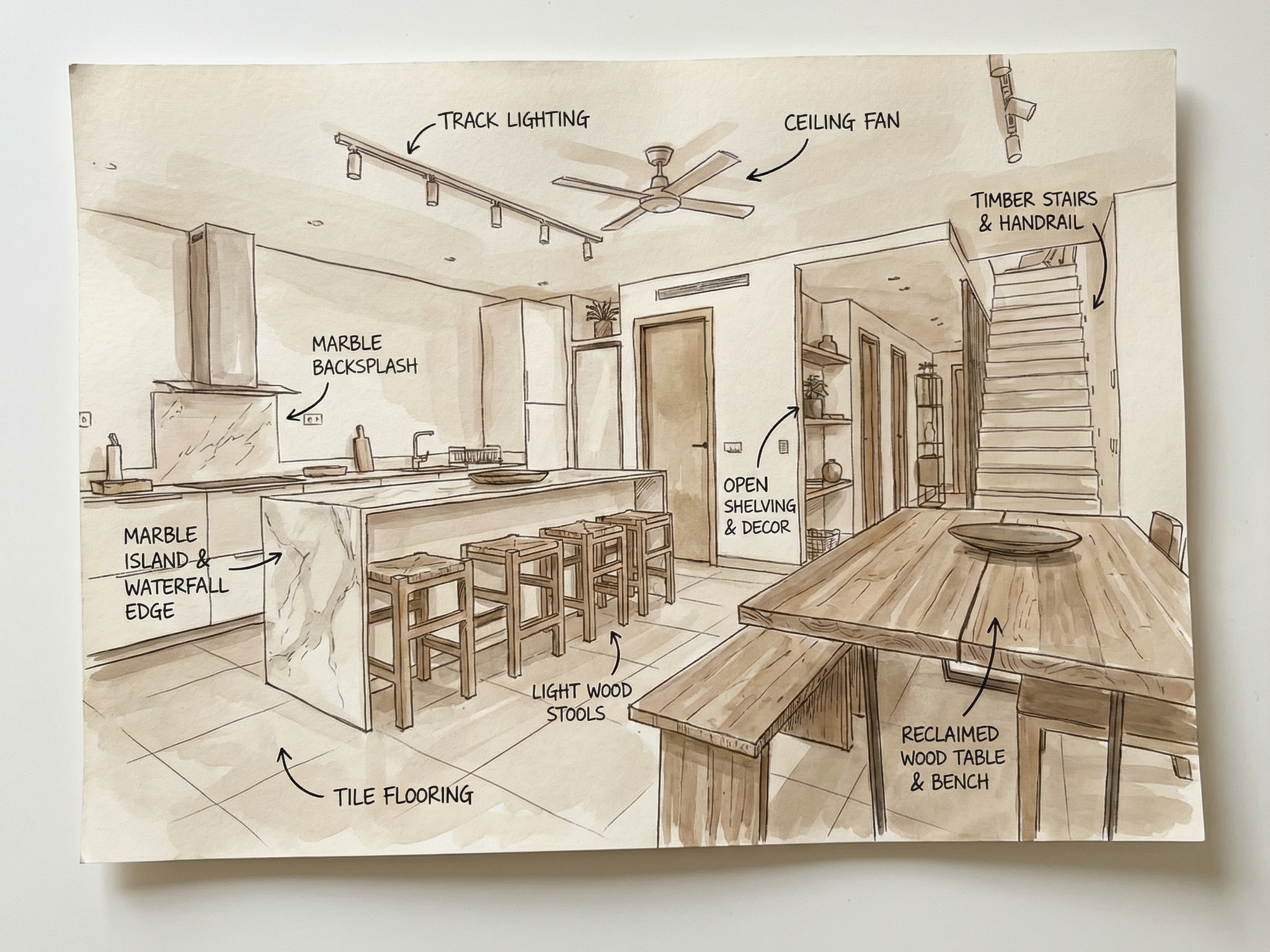
Lighting and ventilation are integrated through a linear track system and a ceiling fan with timber blades, combining function with visual order. Open shelving niches reduce visual weight while providing practical storage.
The timber staircase and handrail extend the material palette vertically, connecting this level with the upper floor. Ceramic tile flooring provides a durable and neutral base suited to daily use.
Overall, the space is defined by clarity, material balance and functional organisation, forming the primary social area of the residence.
This study defines the kitchen and dining area as the central living space of the residence, organised around material continuity and clear spatial flow.
A marble island with waterfall edges forms the focal point of the kitchen, combining functional workspace with a strong material presence. The marble backsplash continues this surface, creating a consistent and refined background.
Wood elements, including stools and the dining table, introduce warmth and contrast to the stone surfaces, balancing the overall material composition. A fixed bench supports a more integrated dining layout, reinforcing the room’s role as a shared space.
Living Room – Material Composition & Spatial Clarity
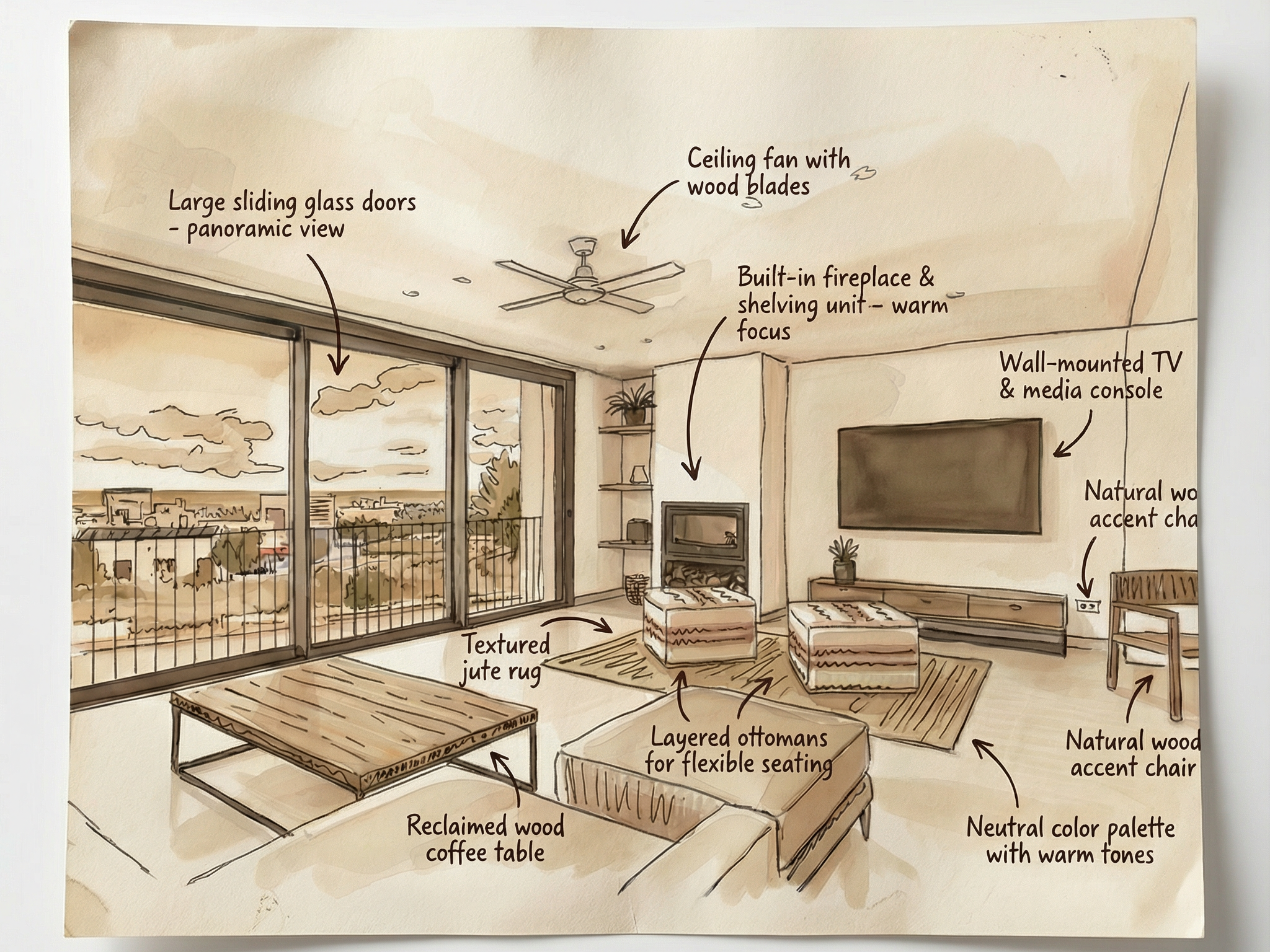
This study defines the living room as a central space organised around material consistency, openness and connection to the surrounding landscape.
The layout prioritises clear spatial organisation, with seating areas positioned to maximise views and natural light. Large openings frame the exterior, reinforcing the relationship between interior space and outdoor surroundings.
Material selection follows a restrained palette of natural textures and warm tones, creating a balanced and durable environment suited to daily use. Integrated elements such as shelving and built-in features reduce visual clutter while maintaining functionality.
The connection to adjacent spaces, including the staircase and circulation areas, ensures continuity throughout the residence and reinforces the overall architectural coherence.
Overall, the living room is defined by clarity, proportion and material balance, forming a functional and visually consistent core within the home.
Bedroom – Calm Materials and Thoughtful Simplicity
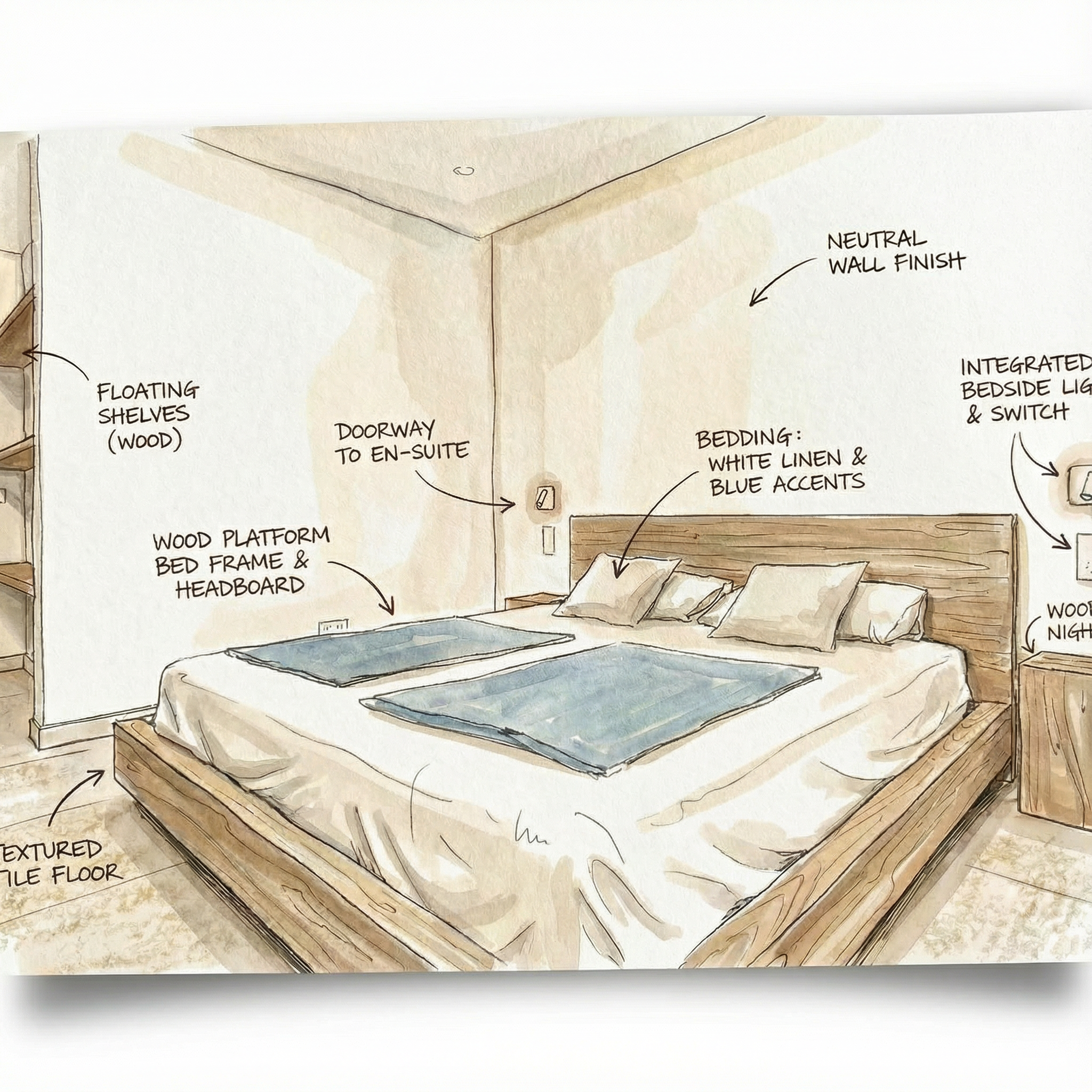
This study defines the bedroom as a calm and restrained private space shaped by material simplicity and functional clarity.
Natural wood elements, including the bed, headboard and bedside surfaces, introduce warmth through simple geometry and visible grain. A neutral wall finish allows textures and materials to remain visually prominent without unnecessary contrast.
Integrated bedside lighting and discreet switches keep the space clean and practical, while floating wooden shelves provide minimal storage near the entrance. Textured tile flooring adds durability and depth, tying the room into the broader material palette of the residence.
A direct connection to the en-suite bathroom supports continuity between private spaces and reinforces the functional organisation of the layout.
Overall, the bedroom is designed as a warm, quiet and durable environment suited to daily use.
Staircase Design – Craftsmanship, Proportion & Material Detail
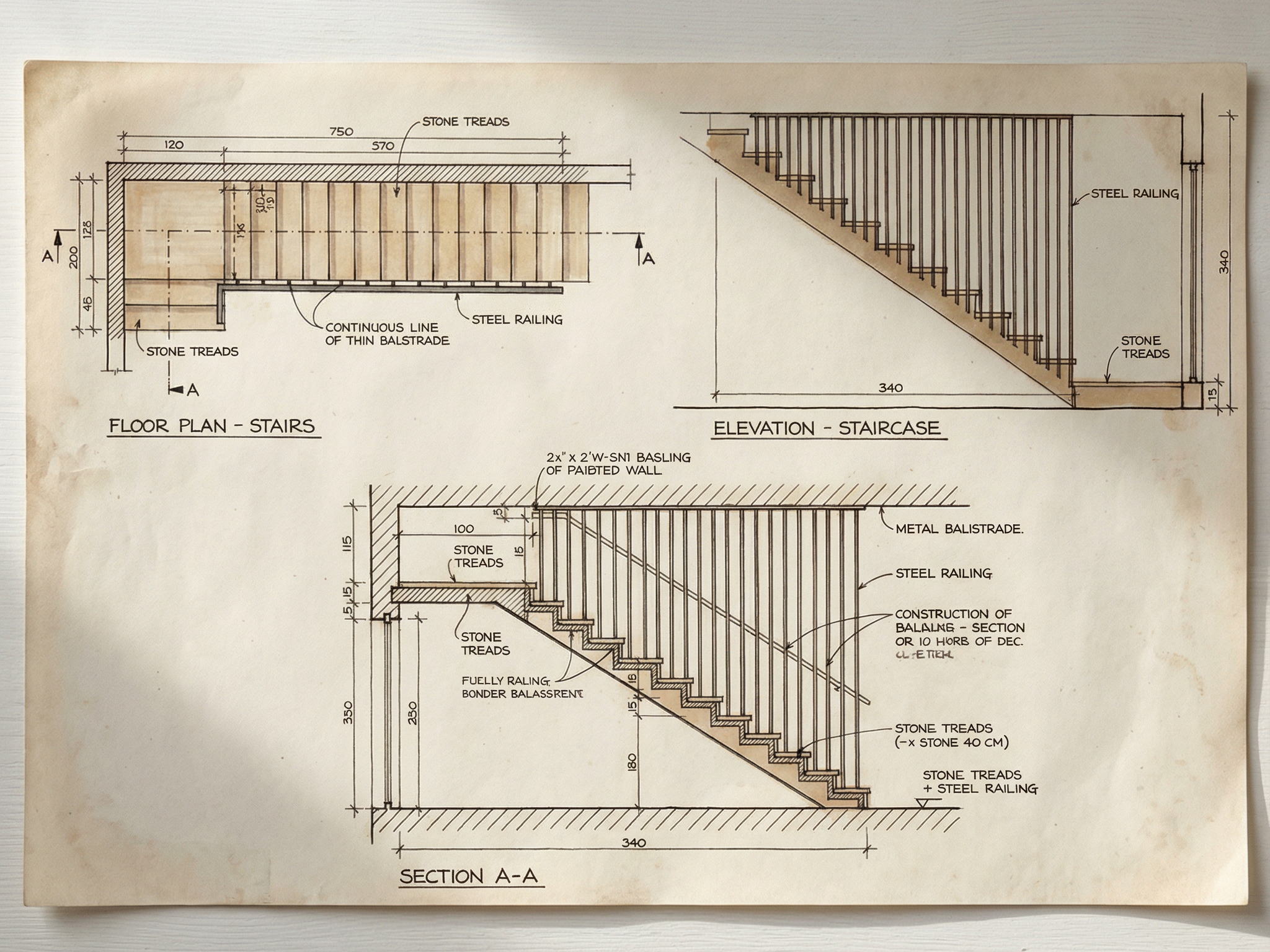
This drawing presents the main staircase as a key architectural element within the residence, combining structural clarity, material consistency and precise detailing.
Stone treads anchor the stair within the home’s material palette, while a continuous steel balustrade of slender vertical elements introduces visual lightness and rhythm. The contrast between stone and metal creates a balanced composition that is both durable and refined.
In elevation and section, the detailing clarifies the construction logic: aligned balusters, an integrated handrail and clean junctions between materials. These transitions reflect a focus on durability, precision and visual restraint.
At the landing, the staircase continues toward the upper level while maintaining the same material language and proportional consistency. Overall, the staircase is conceived as a functional architectural feature that reinforces the broader design language of the residence.
Rooftop Terrace – Elevated Outdoor Living
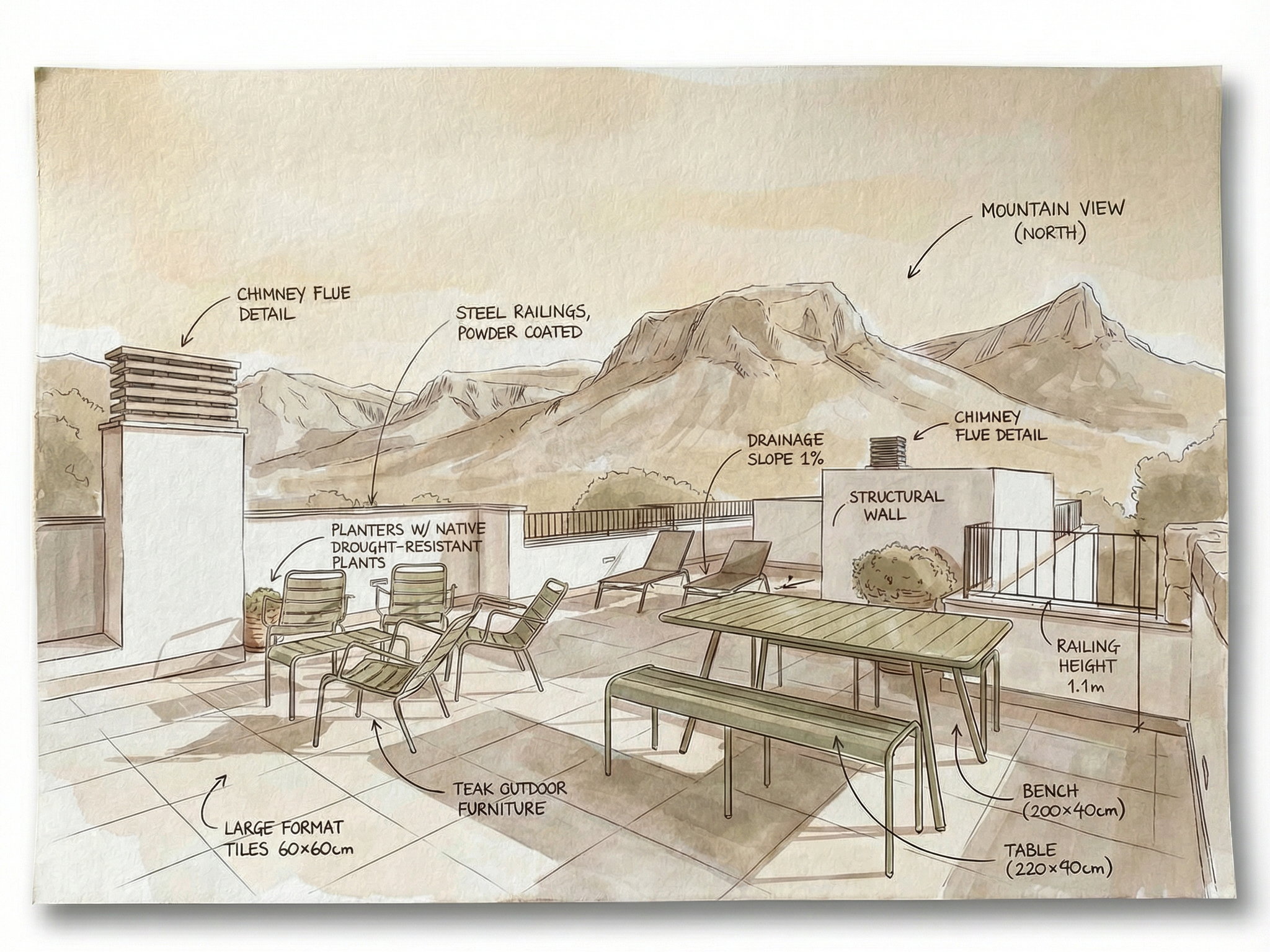
This study presents the rooftop terrace as an additional outdoor living level with open views over the surrounding landscape, including Montferrutx and Alcudia Bay.
The design is based on simplicity, durability and functional use. Large-format tiles create a continuous surface, while teak furniture introduces warmth and flexibility for dining and seating. Planters with drought-resistant species soften the architectural edges and strengthen the connection to the landscape.
Painted steel railings define the perimeter without obstructing the views, and drainage slopes are integrated discreetly to preserve the clarity of the terrace surface. Functional elements such as chimney flues and structural walls are incorporated in a controlled and unobtrusive way.
Overall, the rooftop terrace extends the residence with a private, elevated outdoor space shaped by light, openness and long views.